(TS2) CA23109 Training School: Benchmarking and Fatigue Data Analyses
Join us in Portugal from July 14–17 for an intensive program focused on statistical and probabilistic analysis of fatigue data, featuring keynote lectures from Alfonso Fernández-Canteli and Diego Díaz Salamanca.
Highlights include:
Expert-led sessions on data analysis
A site visit to Coimbra University
Collaborative workshops to shape the data treatment rules for FABER
Call for Contributors: Want to share your expertise? The agenda for the final two days has flexible slots for participant-led lectures. Let us know your topic in the form!
(TS3) CA23109 Training School: Low-Cycle Fatigue and Cyclic Plasticity
Preparing for the FABEST LCF Competition: Data, Models, and Life Prediction
Dates: July 28–30, 2026 Venue: New Assembly Hall (UA3), VŠB – Technical University of Ostrava, Czech Republic Organized by: FABER COST Action (CA23109) – WG 4.7 Low-Cycle Fatigue, prof. Radim Halama.
The FABER Training School is a 3-day intensive program designed mainly for PhD students, early-career researchers, and industry professionals (participation is not limited by age). The school provides a deep dive into the experimental and numerical aspects of Low-Cycle Fatigue (LCF), with a special focus on the challenges of cyclic softening, ratcheting, and mean stress relaxation. This training is specifically designed to support participants of the FABEST LCF Competition, providing them with the necessary tools and knowledge to master the competition dataset and improve their predictive models.
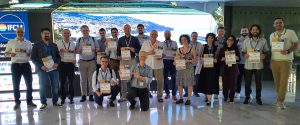
Training School, 2 – 4 July, 2025, Timisoara, Romania
Here you can find the videos produced from each day as well as a summary video.
(TS1) CA23109 Training School & ESIS Summer School on Advances in fatigue of materials and data analysis 2 – 4 July, 2025, Timisoara, Romania
This training school is the right place for young researchers to be trained in current practices in analysing, evaluating, and predicting fatigue damage of materials.
Guidelines for applicants and registration, see here.
Aim: To facilitate capacity building on a topic relevant to the theme of the respective COST Action through the delivery of intensive training on a new or emerging subject. Not intended to provide general training.