

Preparing for the FABEST LCF Competition: Data, Models, and Life Prediction
Dates: July 28–30, 2026
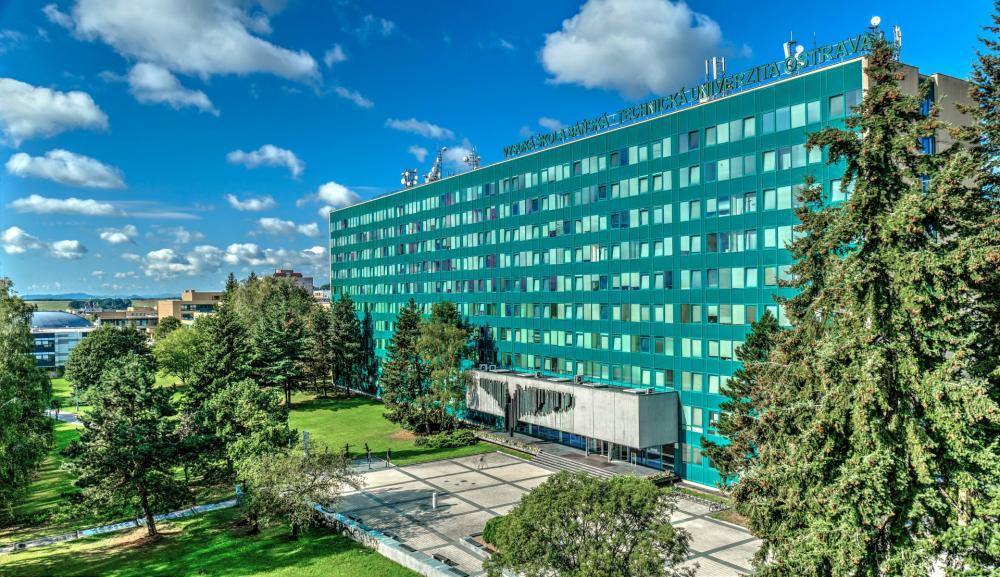
Venue: New Assembly Hall (UA3), VŠB – Technical University of Ostrava, Czech Republic
Organized by: FABER COST Action (CA23109) – WG 4.7 Low-Cycle Fatigue, prof. Radim Halama
Overview
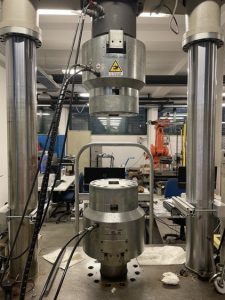
The FABER Training School is a 3-day intensive program designed mainly for PhD students, early-career researchers, and industry professionals (participation is not limited by age). The school provides a deep dive into the experimental and numerical aspects of Low-Cycle Fatigue (LCF), with a special focus on the challenges of cyclic softening, ratcheting, and mean stress relaxation.
This training is specifically designed to support participants of the FABEST LCF Competition, providing them with the necessary tools and knowledge to master the competition dataset and improve their predictive models.
List of Lecturers & Experts
We are honored to host a team of international experts in the fields of cyclic plasticity, computation fatigue analysis, and experimental mechanics:
- Prof. Spyros A. Karamanos (University of Thessaly, Greece)
- Assoc. Prof. Łukasz Pejkowski (Bydgoszcz University of Science and Technology, Poland)
- Dr. Isaac Hong (The Ohio State University, US)
- Dr. Niloy Khutia (Indian Institute of Engineering Science and Technology, India)
- Assoc. Prof. František Šebek (Brno University of Technology, Czechia)
- Prof. Radim Halama (VŠB – Technical University of Ostrava, Czechia)
- Dr. René Marek (Institute of Thermomechanics of the CAS, Czechia)
- Ing. René Souček (Mercury MS company, Czechia)
- Ing. Radim Burda (SVS-FEM company, Czechia)
Preliminary Program
The school is structured into three specialized modules:
- Module 1: Experimental Data & Evaluation
Understand the fundamentals of LCF testing, data quality assurance, and hands-on training with the FABER Python scripts using the high-quality 42CrMo4+QT dataset. - Module 2: Cyclic Plasticity Modeling
Master the calibration of constitutive laws and learn how to implement advanced cyclic plasticity equations in FEM software (including practical guides for USERMAT in Ansys). - Module 3: LCF Prediction & Damage
Apply damage accumulation rules to solve real-world challenges like ratcheting and mean stress effects on fatigue life.
👉 Download the Full Program (PDF)
FABEST LCF Competition
The Training School is closely linked to the FABEST LCF “Blind Prediction” Competition. Participants will have a unique opportunity to discuss their modeling approaches with experts and peers before the submission deadline in October 2026.
👉 Learn more about the FABEST LCF Competition
Registration & Travel Support
- Registration Link: Register Here via Google Forms
- Deadline for Registration: June 22, 2026
- Travel Support: Limited grants (reimbursement of travel and daily allowance) are available for participants from COST member countries through the FABER COST Action. Please indicate your interest in the registration form. To be eligible for support, you must be a registered member of the FABER COST Action (please apply for membership in advance as the approval process takes time).
Additional information:
Venue & Location
The school will take place at the New Assembly Hall (Building UA) in the heart of the VŠB-TUO campus.
- Address: 17. listopadu 2172/15, 708 00 Ostrava-Poruba, Czech Republic
- Map & Navigation:

Accommodation – Recommended Hotels
Participants are responsible for booking their own accommodation. We recommend the following options:
- Hotel Garni VŠB-TUO (On-Campus) – Most convenient, located directly within the university campus, just a 5-minute walk to the venue. (https://hotel.vsb.cz/en)
- Hotel Sareza (Poruba) – Located in the heart of Ostrava-Poruba, within walking distance or a short tram ride to the campus. (https://www.booking.com/hotel/cz/sport-club.en-gb.html?checkin=2026-07-27;checkout=2026-07-30;group_adults=1)
Travel Information – How to reach Ostrava
Ostrava is well-connected to several international airports via train and bus networks.
Option 1: Via Prague Airport (PRG), Czech Republic
- From Airport: Take the “Airport Express” (AE) bus to Prague Main Railway Station (Praha hlavní nádraží).
- To Ostrava: Use high-speed trains (Pendolino, RegioJet, or Leo Express). The journey takes approximately 3 hours.
- Stop: Get off at Ostrava-Svinov station (which is closest to the University campus in Poruba).
Option 2: Via Katowice (KTW) or Krakow (KRK) Airports, Poland
- Katowice Airport (KTW): This is the closest major international airport to Ostrava.
- Transport: Direct bus shuttle services are operated by Leo Express and FlixBus.
- Travel time: Approx. 1.5 hours.
- Stop in Ostrava: Choose “Ostrava-Svinov” as your destination (closest to the university).
- Krakow Airport (KRK):
- Transport: Direct buses are operated by FlixBus (several times a day).
- Travel time: Approx. 2 – 2.5 hours.
- Stop in Ostrava: Choose “Ostrava-Svinov”.
Option 3: Via Vienna Airport (VIE), Austria
- Transport: Direct trains run from Vienna Main Station (Wien Hbf) or direct buses from the airport to Ostrava. The journey takes about 3.5 – 4 hours.
Local Transport in Ostrava
- From the Ostrava-Svinov train station, take any tram heading towards “Poruba” (Trams No. 7, 8, 17) and get off at the “Hlavní třída” (closer to the venue and Sareza hotel) or “VŠB-TUO” (closer to Hotel Garni) stop.
- You can pay for all public transport using a contactless credit/debit card directly inside the tram/bus (just “tap” when you enter). No need to buy paper tickets.
Contact Information
For any questions regarding the training school, please contact:
- Dr. Martin Šotola ([email protected]) – organizational matters
- Prof. Radim Halama ([email protected]) – scientific program