
The FABER COST Action (CA23109) is thrilled to announce the launch of its flagship benchmark study: the FABEST Low-Cycle Fatigue (LCF) Competition.
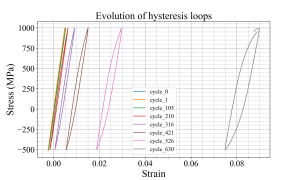
This international “blind prediction” competition challenges researchers from both academia and industry to test their computational models against a new, high-quality experimental dataset.
The Scientific Challenge
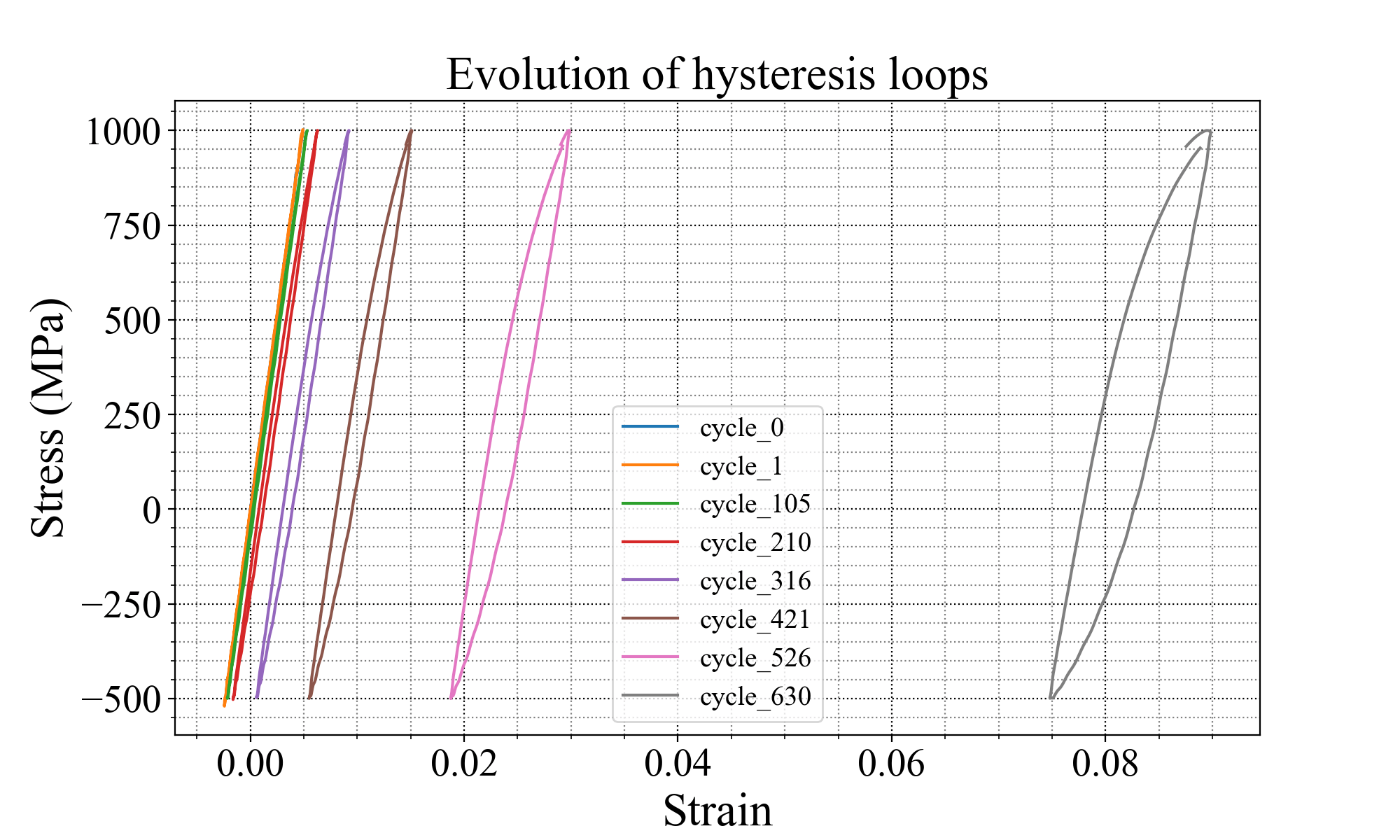
The competition focuses on the complex cyclic behavior of 42CrMo4+QT steel and aims to answer key research questions:
- Can a single set of material parameters describe both ratcheting and mean stress relaxation?
- What is the most accurate prediction method for these complex histories?
- How critical is it to model the material’s distinct transient cyclic softening?
Key Information:
- Official Launch: May 5-6, 2026, at the 1st FABER Conference.
- Submission Deadline: December 31, 2026.
- Format: A “blind prediction” challenge. A calibration set of 24 LCF experiments is provided. The validation experiments will be performed after the submission deadline.
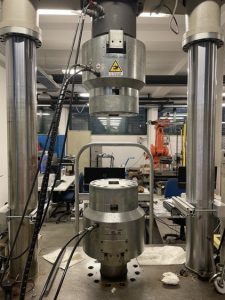
- Scientific Oversight: All experiments were performed by Prof. Radim Halama at VŠB – Technical University of Ostrava to ensure data consistency. The entire process is independently verified by Prof. Spyros A. Karamanos and his team at the University of Thessaly, Greece, to guarantee full transparency.
- Who can participate? The competition is open to everyone. Submissions are limited to a maximum of two authors.
Support: Training School in Ostrava
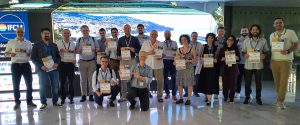
To help participants prepare their predictions and master the Python toolsets, a dedicated Training School was held at VŠB – Technical University of Ostrava on July 28–30, 2026.
The program includes specialized sessions on:
- Standardized experiment evaluation using FABER Python scripts.
- Cyclic plasticity modeling and parameter identification, implementation in Ansys.
- Advanced LCF life prediction and damage accumulation.
👉 Learn more and register for the Training School here.
👉 The Training School materials can be downloaded here.
How to Get Involved:
Ready to take on the challenge? Follow these steps to get started:
- Review the Rules (Quick Download)
Before downloading the full dataset, you can review the detailed competition task, categories, and evaluation metrics here. - Study the Experimental Basis
Learn about the 42CrMo4+QT material behavior and the testing procedures used at VŠB-TUO here. - Download the Full Benchmark Package
Get the complete calibration dataset (24 experiments), submission templates, and documentation from our official repository:
👉 [Access the Full Dataset on ZENODO]
(Note: The package size is approximately 530 MB). - Register for the FABEST LCF Competition
Let us know you are participating! Official registration is mandatory to be eligible for prizes:
👉 Competition Registration Form - Simulate & Predict
Tune your models using Cases 1–3 and prepare your “blind” predictions for Cases 4 and 5.
Submission of results will open in July 2026.
👉 September 11, 2026: CLARIFICATIONS & TECHNICAL Q&A – Release 1.1 (.pdf document)